Your vacuum is unable to completely eliminate the dust mites, mould spores, pet dander, and bacteria that are present on your carpeted stairs.
At Ascend Stairs, we’ve renovated some Melbourne staircases. What we find underneath old stair carpet is almost always worse than what the homeowner expected.
Every footstep grinds contaminants deeper into the fibres. Melbourne’s humid environment does the rest, providing almost ideal circumstances for allergies to proliferate all year round.
This isn’t about how clean your home is. It has to do with what carpet is made to retain and how it affects the air your family breathes on a daily basis.
That’s why Melbourne families are pulling up their stair carpet for good.
The Carpet on Your Stairs Isn’t Just a Surface – It’s an Ecosystem
Carpet is engineered to trap. That’s one of the reasons it’s soft underfoot and quiet to walk on. But the same fibres that absorb sound and cushion your step also capture everything that lands on them, and hold on tight.
On stairs specifically, that trapping effect is far worse than on flat floor carpet. Stairs are compressed with every footstep. Dirt and debris are pushed downward into the pile rather than sitting on top where a vacuum can reach them. Gravity and repeated foot traffic do the rest.
Over time, even a well-maintained carpeted staircase accumulates a microbial population that most homeowners would find deeply unsettling if they could see it.
Dust Mites: Melbourne’s Invisible Stair Residents
The naked eye cannot see dust mites, which are 0.3mm in size. They feed on dead human skin cells, which are shed constantly and settle into carpet fibres throughout the day.
A single gram of carpet dust can contain up to 2,000 dust mites and 250,000 of their faecal pellets. It is the pellets, not the mites, that cause allergic reactions. When disturbed by foot traffic, they become airborne and are inhaled directly.
Stairs are particularly high-risk because they’re walked on repeatedly and rarely deep-cleaned. Melbourne’s humid summers (regularly hitting 60–80% relative humidity) create conditions that dust mites thrive in. The Australian Society of Clinical Immunology and Allergy (ASCIA) identifies dust mite allergens as the most common trigger of allergic asthma in Australia.
Mould Spores and Melbourne’s Humidity Problem
Melbourne’s weather is famously unpredictable. Four seasons in a day is not a cliché; it is a fact that causes significant humidity variation within homes, particularly in regions with limited circulation, such as stairwells.
Mould occurs when moisture becomes trapped in carpet underlay due to humidity, washing, tracked-in rain, or spills that have not been entirely dried. Mould spores are released into the air as colonies grow and are inhaled by anyone using the stairs.
Unlike surface mould on a tile or bench, mould growing in carpet underlay is hidden. By the time it’s detectable by smell, the colony is already well established.
What a Pest Inspector Won’t Tell You (But a Vacuum Will)
A normal household vacuum with a HEPA filter eliminates 50-85% of allergens from carpet surface layers, depending on the carpet’s age and condition, as well as the depth to which contaminants have been compacted.
What it doesn’t remove: allergens embedded in the underlay, mould growing at the base of the pile, or the biological debris that has been compressed into the carpet backing over years of use.
The Allergen Load Hidden in Stair Carpet Fibres
Beyond dust mites and mould, stair carpet acts as a collection point for:
- Pet dander – microscopic flecks of skin shed by cats, dogs, and other animals. Dander is sticky and clings to carpet fibres, surviving for months even after a pet leaves the home.
- Pollen – tracked in on shoes and clothing, particularly relevant during Melbourne’s notorious spring pollen season.
- Bacteria – studies have found carpet harbours up to 4,000 times more bacteria than a toilet seat. High-traffic areas like stairs accelerate this accumulation.
- VOCs (Volatile Organic Compounds) – chemicals from cleaning products, shoe soles, and adhesives that off-gas over time and are absorbed into carpet fibres.
- Outdoor contaminants – pesticides, heavy metals, and fine particulate matter tracked in from Melbourne footpaths and gardens.
Each of these is stirred back into the air every time someone walks up or down the stairs.
Why Stairs Are the Worst Place to Have Carpet in Your Home
Flat carpet in a bedroom or lounge gets walked on occasionally and vacuumed relatively easily. Stair carpet is different in almost every way.
Stairs are compressed with every single step. The mechanics of climbing, such as the heel strike and push-off, force contaminants deeper into the pile than flat-surface foot movement ever would.
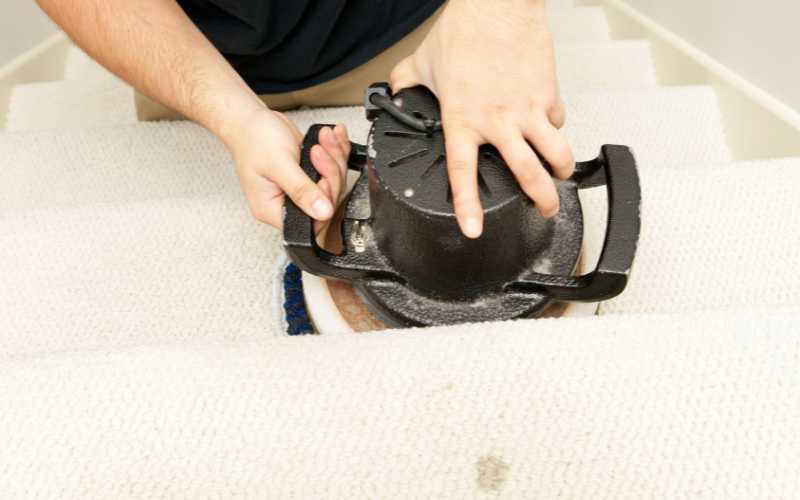
Stair carpet is also extremely difficult to clean thoroughly. The small treads, risers, and edges where the tread meets the balustrade are all spots that a normal vacuum head cannot effectively reach. Corners and edges are where contamination is highest, and they’re the hardest to clean.
Most professional carpet cleaners also note that stair carpet ages faster than flat carpet. The repeated compression on the nosing (the front edge of each tread) breaks down fibres more quickly, creating fraying and gaps where dirt accumulates even more readily.
The Health Impact on Kids and Pets
Children and pets spend more time at floor and stair level than adults. They make direct contact with surfaces when crawling, sitting, or lying down, and are more likely to put their hands in their mouths afterwards.
For households with children under five or with pets that use the stairs regularly, the exposure to stair carpet allergens is significantly higher than for adults who simply walk past.
Children’s immune systems are still developing. Early and repeated exposure to dust mite allergens has been linked to the development of asthma and allergic rhinitis. According to Asthma Australia, asthma affects around one in every nine Australians, with dust mite sensitisation being one of the most common contributing factors.
Carpet allergens can cause skin irritation, excessive scratching, and respiratory issues in pets, which many Melbourne pet owners blame on other factors without taking the stairs into account.
Why Melbourne Families Are Making the Switch
The shift away from carpeted stairs isn’t just a design trend. It’s a practical health decision that more Melbourne families are making once they understand what carpet is actually holding onto.
Hard stair surfaces, such as hardwood, vinyl, or hybrid flooring, do not trap allergens. Dust, dander, and debris sit on the surface where they can be swept or wiped away completely. There’s nowhere for mould to grow. There’s no pile for mites to colonise.
The practical benefits stack up quickly:
- Easier to clean – a quick sweep or damp mop removes surface debris entirely
- No hidden mould risk – hard surfaces dry quickly and don’t absorb moisture
- Better indoor air quality – fewer airborne allergens stirred up with every footstep
- Longer lifespan – hard treads don’t compress, fray, or stain the way carpet does
- Improved home value – timber or hard stair treads are consistently rated as a value-adding renovation in Australian real estate
For Melbourne families who have previously replaced flat carpet with hard flooring throughout the rest of their home, leaving carpet on the stairs has become an obvious anomaly, which many are now addressing.
What Are the Best Alternatives to Carpet on Stairs?
Once a family decides to remove stair carpet, the most common question is: what goes on instead?
Timber Stair Treads
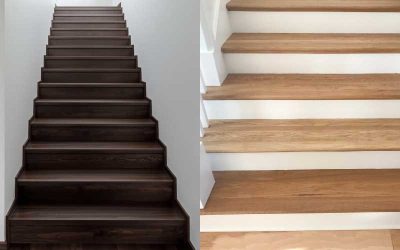
Hardwood timber treads are the most popular replacement in Melbourne homes. Species like blackbutt, spotted gum, and Victorian ash are durable, beautiful, and suited to Melbourne’s climate. Engineered timber treads are also popular since they provide the same look while increasing stability in reaction to humidity fluctuations.
Timber stairs are warm underfoot, add genuine character to a home’s interior, and pair naturally with the timber flooring many Melbourne homeowners already have throughout their property.
Vinyl Stair Treads
Luxury vinyl plank (LVP) stair treads are a practical and cost-effective option, particularly for families with young children or high foot traffic. They’re waterproof, highly durable, and available in a wide range of finishes that convincingly replicate timber.
With the correct profile and surface, vinyl provides excellent slide resistance, which is critical for stair safety.
Hybrid Flooring Options
Hybrid flooring, which consists of a sturdy core board with a vinyl wear layer and a timber-look surface, is priced and performs similarly to timber and vinyl. It handles Melbourne’s humidity fluctuations particularly well and is an increasingly popular choice for stair tread replacement.
How Ascend Stairs Makes the Transition Easy in Melbourne
Removing stair carpet and installing quality hard treads is not a straightforward DIY job. The existing substrate needs to be assessed, the tread profile needs to be correct for safety and compliance, and the nosing finish matters both aesthetically and structurally.
Ascend Stairs specialises in exactly this type of staircase renovation and stair building across Melbourne and regional Victoria. The crew oversees the entire procedure, from removing the original carpet and underlay to inspecting the substructure and supplying and installing new timber, vinyl, or hybrid treads.
Every installation is completed to Australian building code standards, with the right tread depth, riser height, and nosing profile for both safety and longevity. The end effect is not simply a cleaner staircase, but one that also improves the inside environment of your home.
The Decision Most Melbourne Families Don’t Regret
Carpeted stairs feel soft and familiar. But familiarity isn’t the same as healthy.
Stair carpet is one of the most troublesome surfaces in any Melbourne home, especially for families with kids, allergy sufferers, or pets, due to the accumulation of dust mites, mould spores, pet dander, bacteria, and compacted allergens from years of use.
Switching to hard stair treads eliminates the problem at the source. There’s nothing for allergens to hide in, nothing for moisture to feed, and nothing a simple clean can’t resolve.
Now is the ideal moment to learn about the contents of your home’s carpeted stairs and what life would be like without them.
Ready to replace your stair carpet? Get in touch with Ascend Stairs for an obligation-free consultation. As a Melbourne staircase manufacturer, we will assess your existing stairs and recommend the best hard tread solution for your home, your family, and your budget.