Neither is universally better, the right choice depends on your home’s light, size, and style.
Light timber suits smaller homes and south-facing rooms where you need to maximise brightness. Dark timber works best in larger, well-lit spaces where you want warmth and contrast. Both can look exceptional when matched to the right interior.
It may sound like an easy decision, but your choice of dark and light timber can affect the mood of your entire home. How open it looks, how much upkeep you will have to do, and if it will still look amazing in 10 years’ time. At Ascend Stairs, we work with Melbourne homeowners every day to help them get this right. Here’s everything you need to know.
Why Timber Tone Matters More Than You Think
A staircase isn’t just functional. In most homes, it’s one of the largest continuous surfaces in the interior. It runs from floor to ceiling, connects multiple levels, and sits right in the heart of your living space.
That means that the tone you choose, whether dark or light, has a major visual impact on the surrounding space. It affects how natural light bounces around the space, how the staircase relates to your flooring and walls, and whether the overall feel reads as warm, cool, airy, or grounded.
Choosing purely on trend is a mistake. The right choice depends on your home’s specific conditions.
The Case for Dark Timber Stairs
Dark timber – such as blackbutt with a deep stain, walnut or American oak in a deeper finish – has a powerful presence. It adds depth, contrast and a sense of stability to a space.
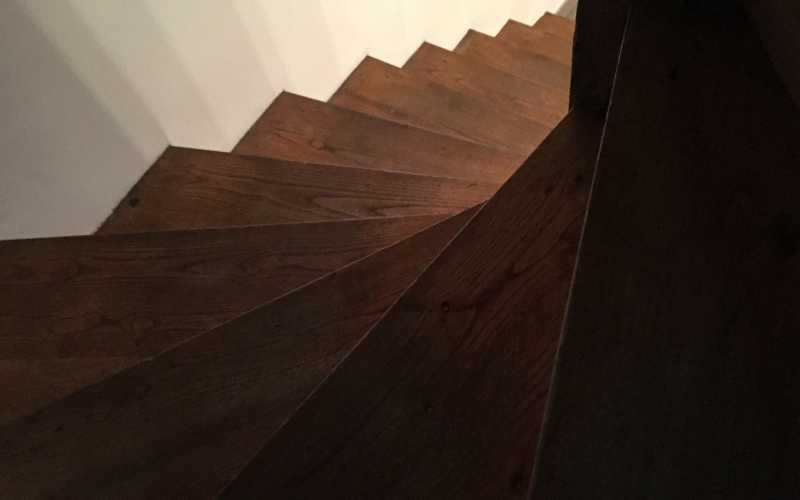
Where dark timber works best:
- Homes with strong natural light. If your entry or staircase area gets good light through large windows, dark timber absorbs light beautifully without making the space feel heavy. The contrast becomes a feature.
- Open-plan modern interiors. Dark stairs anchor an open-plan layout and give the eye a clear focal point. Paired with white walls or light-coloured flooring, the contrast is intentional and striking.
- Older or heritage-style homes. Victorian and Edwardian homes in Melbourne’s inner suburbs often benefit from darker timber, which complements period features like ornate balustrades and high ceilings.
- Larger homes with wide stair widths. The visual weight of dark timber suits generous proportions. In a narrow staircase, the same finish can feel cramped.
The honest trade-offs of dark timber:
Dark timber shows dust, pet hair, and light surface scratches more readily than lighter finishes. If you have young children or pets, you’ll be reaching for the broom more often. Deep scratches, however, tend to blend in better on darker finishes than on light ones, so there’s a trade-off either way.
The Case for Light Timber Stairs
Over the last decade, light timber – such as spotted gum in a natural finish, white oak, ash or a limed or bleached Australian hardwood – has emerged as a popular choice across Melbourne. And for good reason.
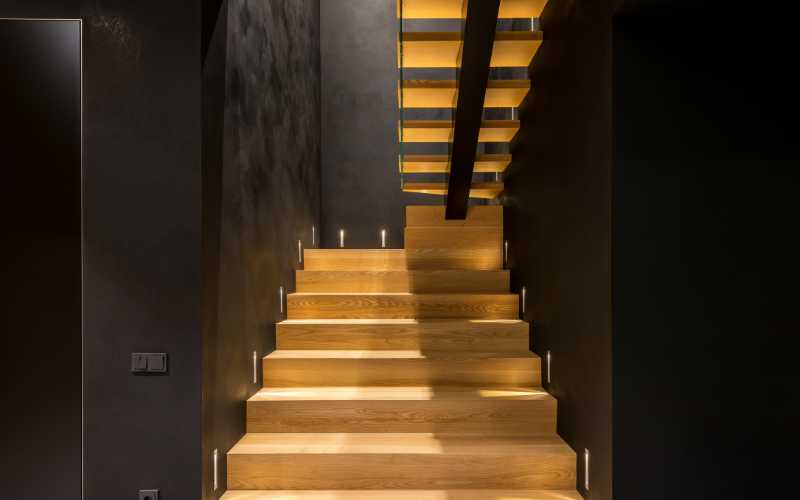
Where light timber works best:
- Smaller homes and apartments. Light timber reflects more natural light and makes a space feel larger and more open. In a terrace house or townhouse where the staircase is in a tight hallway, a lighter finish can completely change how the space breathes.
- Coastal and Scandinavian-inspired interiors. If your home leans toward a relaxed, natural aesthetic with linen tones, rattan, or whitewashed surfaces, light timber stairs feel cohesive rather than contrived.
- Homes with less natural light. North-facing homes in Melbourne are the lucky ones. South-facing properties — or those with small windows — benefit significantly from lighter finishes that bounce whatever light is available around the space.
- Contemporary minimalist designs. Light timber paired with simple steel or glass balustrades creates a clean, uncluttered look that sits well in new builds and recently renovated homes.
The honest trade-offs of light timber:
Light timber hides dust better than dark, but it makes fine scratches more visible, particularly in high-gloss finishes. A matt or satin finish on lighter timber is generally more forgiving in a busy household. Scuff marks can also be seen more clearly near the nosings, which are the front edges of each tread and receive the most foot traffic.
What Melbourne’s Climate Means for Your Timber Choice
Melbourne’s climate is notoriously unpredictable, with humidity shifts between seasons that can cause timber to expand and contract. This is worth factoring in when choosing your finish and species.
Engineered timber treads handle Melbourne’s humidity fluctuations better than solid hardwood in some applications; they’re less prone to cupping or gapping over time. Some species are also more stable than others. Blackbutt and spotted gum, both native Australian hardwoods, are well-regarded for their dimensional stability and durability underfoot.
Your finish also plays a role. Oil-based finishes allow timber to breathe more naturally and are easier to spot-repair than polyurethane coatings, something worth considering when weighing up long-term maintenance.
Balustrades, Handrails, and the Bigger Picture
Your timber tone doesn’t exist in isolation. It needs to work with your balustrade material, handrail profile, and the wall colours around it.
Dark timber stairs tend to pair well with black powder-coated steel, wrought iron, or dark-stained timber balustrades. Light timber stairs often look best with brushed stainless steel, glass panels, or white-painted timber balustrades that keep the palette consistent.
For homeowners in regional Victoria, good design support matters just as much as it does in Melbourne. Those looking at a stair balustrade, for example, will find the same pairing principles apply – the material contrast between the balustrade and the tread is just as important as the colour choice.
Dark vs Light: A Side-by-Side Comparison
| Factors | Dark Timber | Light Timber |
| Best suited to | Large homes, high-light rooms, heritage interiors | Smaller homes, low-light rooms, modern interiors |
| Visual effect | Grounding, rich, dramatic | Airy, spacious, relaxed |
| Dust visibility | Higher | Lower |
| Scratch visibility | Lower (deep scratches blend) | Higher (surface scratches show more) |
| Maintenance | More frequent cleaning | Less frequent, but finish-sensitive |
| Most popular species | American walnut, dark-stained blackbutt | Spotted gum (natural), white ash, limed oak |
| Pairs well with | Black steel, wrought iron, dark timber balustrades | Glass, brushed steel, white-painted balustrades |
The Most Common Mistake Homeowners Make
Choosing based on what looked good in someone else’s home.
A dark staircase that looks stunning in a photographer’s well-lit, north-facing Melbourne property can look oppressive in a south-facing home with a narrow hallway. A light staircase that felt fresh and modern in a display home can look washed-out against pale walls with no natural contrast.
The best decisions are made with your specific floor plan, light conditions, and existing finishes in mind — not from an Instagram mood board alone.
Choosing a Builder Who Understands the Detail
Whether you’re renovating in Melbourne’s inner east or building new in the outer suburbs, the quality of the build matters as much as the material choice. Homeowners across central Victoria looking for staircase builders, for instance, increasingly want specialists who can advise on both the technical build and the aesthetic decisions that affect the finished result.
The same is true further west — homeowners searching for staircase manufacturers in Melbourne deserve the same level of design guidance, not just a quote on materials.
Good staircase builders don’t just cut and install timber. They understand how a staircase sits within the architecture of your home and what finish decisions will stand up over time.
Making the Final Call
If you’re still weighing up the decision, here’s a simple framework:
Choose dark timber if:
- Your home gets strong natural light
- You want a statement feature staircase
- You have a larger home with generous proportions
- You lean toward rich, warm interior palettes
Choose light timber if:
- Your home has limited natural light
- You’re working with a compact floor plan
- You prefer a relaxed, contemporary aesthetic
- You want something that hides everyday dust and debris more easily
Ready to Choose Your Staircase Timber?
At Ascend Stairs, we work with Melbourne homeowners from the first design conversation through to the final installation. We’ll bring timber samples, review your floor plan, and help you make a decision that works for your home, not just for the photos.
Get in touch with Ascend Stairs today to book a consultation and see your options.